
The American Association of Orthodontics recommends that your child should have an orthodontic exam by age seven.
Early Orthodontic Treatment for Children
While there is no exact age for children to begin orthodontic treatment, the American Association of Orthodontists recommends visiting the orthodontist around age seven. By this age, most children have a mix of baby teeth and adult teeth, making it easier for the orthodontist to diagnose and correct tooth and jaw problems sooner and without surgery.
With well timed interceptive treatment Dr. Emma can get excellent results by guiding jaw growth and permanent teeth into more favorable positions and managing crowding and spacing problems.
Does My Child Need Braces?
Most children just need an orthodontic evaluation, which is done at no charge and doesn’t take very long at all. However, there are children who come in for an early treatment check-up and Dr. Emma can see problems that, if treated early, can avoid more involved orthodontic treatment later in life.
How Do I Know If My Child Needs to See an Orthodontist?
If your child is experiencing any of the following, Dr. Emma recommend a FREE Evaluation to review their individual needs.
- Early or late loss of baby teeth
- A hard time chewing or biting food
- Mouth breathing
- Finger or thumb sucking
- Crowded, misplaced, or blocked teeth
- Jaws that pop or make sounds when opening and closing
- Teeth that come together abnormally, or do not come together at all
- Jaws and teeth that are not proportionate to the rest of the face
- Crowded front teeth around age seven or eight
What are Problems to Watch for in Growing Children?
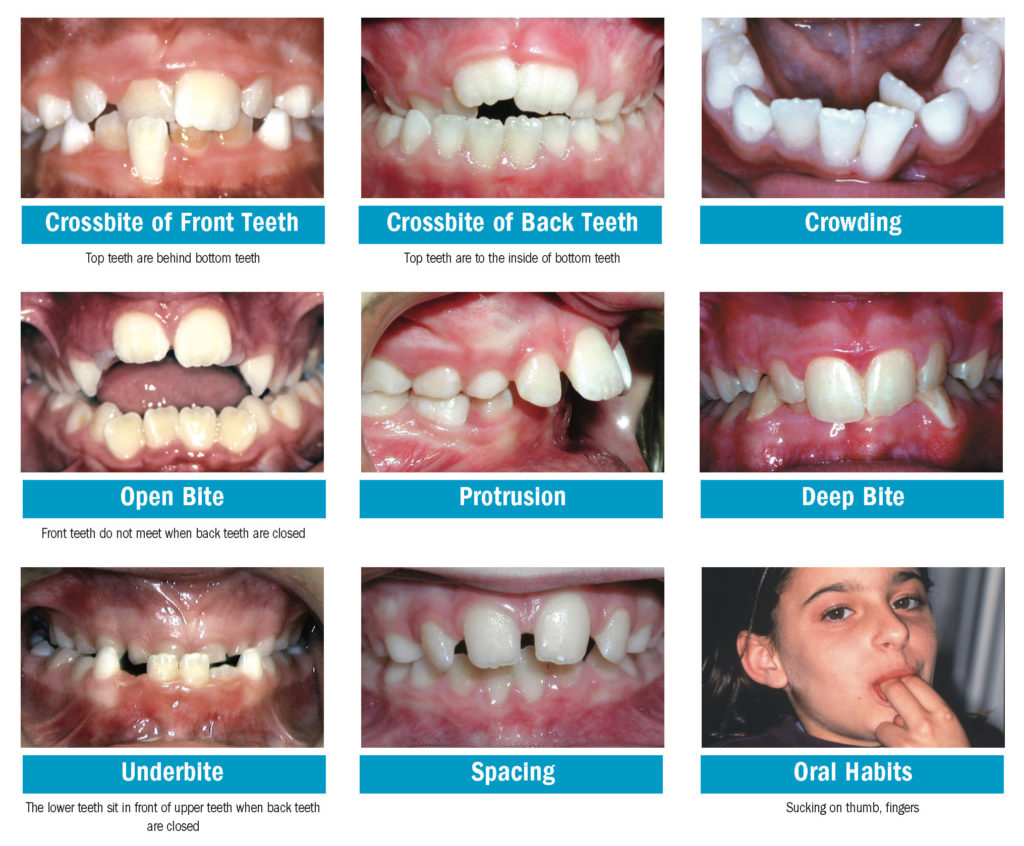
Malocclusions (“bad bites”) like those illustrated below, may benefit from early diagnosis and referral to an orthodontic specialist for a full evaluation.